

Found this interesting video while looking at the Pharyngula blog. Interesting how things just accelerate near the last seconds and milliseconds.....
Showing posts with label evolution. Show all posts
Showing posts with label evolution. Show all posts
Wednesday, February 18, 2009
Do you have a minute????
Friday, September 19, 2008
And we thought we were so very special....
 When it comes to emotions, humans think they are special. We think we are the only creatures capable of empathy....NOT! Chimps, our closest cousins, do that as well! After a bad day or a bad fight some chimps will hug the broken hearted to comfort and to relieve stress. See...."animals" have feelings too!
via: Times Online
Monday, September 15, 2008
They finally understood.....
 The Anglican Church apologized for misunderstanding Darwin's theory of evolution! It is a start....others will follow and stop thinking the Bible is a science book! Way to go Rev. Brown!
Read the article from The Guardian HERE
Rev Malcolm Brown: Good Religion Needs Good Science
If you are interested...more to read HERE
Monday, June 23, 2008
Way to go Philly!

Philadelphia will honor Darwin and the evolution theory and John E. Jones III is invited to give a talk.
Wednesday, May 28, 2008
Should we be surprized?
Found today...in PLOS Biology
"Community pressures place significant stress on teachers as they try to teach evolution, stresses that can lead them to de-emphasize, downplay,or ignore the topic."


Tuesday, May 27, 2008
Monday, September 24, 2007
Are we evolving?
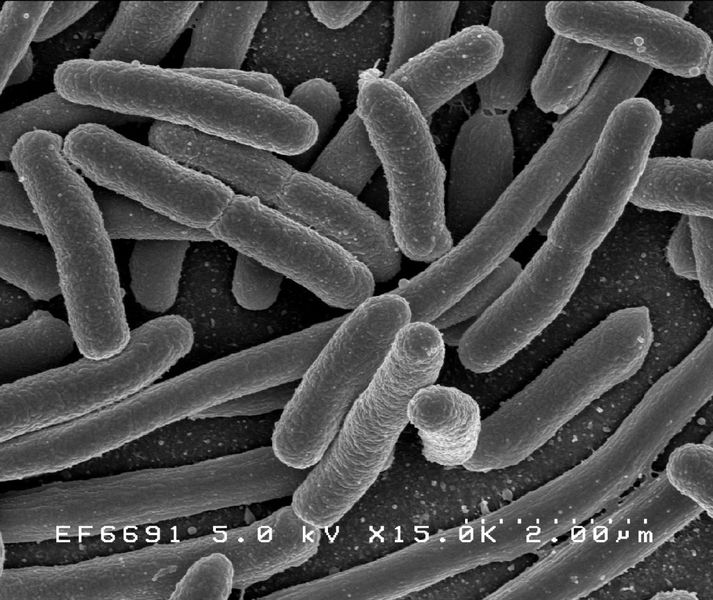
 Bacteria evolve right before our eyes. Hospital acquired diseases are a very good example. Overexpose bacteria to some antibiotic, toxins, metals etc...they will change in a matter of days, adapting to their new environment. Unicellular organisms have absolute freedom to change because their own evolution, as individuals, can only benefit the population. If they fail to adapt, some individuals will be eliminated BUT those who are successful will become the ancestors of a resistant colony.
Why is it that this principle can not be applied to our own cells? Simply put, because the fate of our own cells is interconnected, a small change in the genome could mean disaster for the other ones. The reason why our own cells do not evolve in our lifetime (under normal circumstances) is discussed in an article by Pepper et al., soon to be published in PLoS computational biology. An article on the Nature website (september 21, 2007)explain why evolution within our own cells is unlikely and not desirable. Our tissues simply DO NOT evolve!
It is known that epithelial tissues have a rather high turnover...old cells are replaced on a constant basis. The speed at which they grow could suggest that these cells are more prone to mutations. This is not the case. As Philip Ball explains in its news feature (Nature): "Why a person doesn't evolve in one lifetime" epithelial cells take a long walk on the way to differentiation. Epithelial stem cells divide just a little before they commit to their final state. Mutations can occur within these cells but since they do not compete against each other because these mutations make differentiation of these stem cells more difficult.
On the other hand, the immune system is made to evolve, it has to adapt to new pathogens every single day but there is a price we pay for this: a higher incidence for cancer!
Reference: http://www.nature.com/news/2007/070917/full/070917-11.html
Image source: http://www.digitalapoptosis.com/archives/science/cells2.jpg
Friday, November 17, 2006
Are we the ORFans of the universe?
In a recent posting, the Christian Post stated: "Intelligent Design Defended by Unsolved Genetic Puzzle". This article appeared online on Nov. 17, 2006 at 2:45 PM.
In a recent conference, Dr. Paul A. Nelson (Biola University) stated that "I want to remind you that you don't need a theory of design to know that is design". In an attempt to discredit Darwin's theory of evolution by common descent, Dr. Nelson focused on ORFans, genes that seem to have no ancestral descent. In a nutshell, ORF (Open Reading Frames) are segments of DNA that code for proteins. As these genes change in evolution, a track is left. Following these tracks, through the use of computers and bioinformatics, can lead to a common ancestor. ORFans are genes that have no known common ancestor....but also, on a more technical point of view, ORFans are annotated open reading frames with no homologs in CURRENT databases. This could change with more research.
Dr. Nelson argues that humans rationality can detect intelligence without further evidence. He gave the mycoplasma example, a very simple organism that has 33% of its genes as ORFans. If I understand well, this points to the fact that the more ORFans an organism has, the higher the evidence that it originated from intelligent design.
Let me point you in another direction. Bacteriophages are bacterial viruses. These tiny creatures have the ability to inject their DNA in bacterial cells. According to Rocha and Danchin (2002) bacteriophages could be responsible for introducing A+T rich sequences into bacterial genomes (ORFans are known to be A+T rich sequences). So far, bacteriophage diversity has been poorly characterized....therefore homologs are difficult to find!
Dr. Nelson, please acknowledge that having no KNOWN homologs does NOT point in the direction of Intelligent Desing. Lets be objective here!
References:
E.P.C. Rocha and A. Danchin. 2002. Base composition bias might result from competition for metabolic resources. Trends in Genetics, 18:291-294.
Subscribe to:
Posts (Atom)


