
 Once in a while I read Pharyngula, the most popular of all scientific blogs and once in a while it makes me laugh or shake my head in disagreement with PZ Myers....anyway...
This time it is different and I am happy that PZ did a good job of explaining the latest "clue" of a creationist past.
In their website THE UNCOMMON DESCENT, creationists cite an interesting article that was recently published in PNAS: Two-phase increase in the maximum size of life over 3.5 billion years reflects biological innovation and environmental opportunity.
The author(s) of the Uncommon Descent blogpost cite the authors and give their own creationist interpretation either because they do not understand the article or because they did not read it. PZ Myers explains the article with an interesting example of Australian drunks getting out to the streets. It is a useful analogy.
If you are interested in this topic, read this Pharyngula post and please remember that citing authors in a way that suits your own hypothesis with the knowledge that it might be wrong is scientific dishonesty.
Wednesday, January 14, 2009
Intellectual Dishonesty
Monday, June 02, 2008
Languages and genomes
While looking through Technorati I stumbled on this blog post..."Litterature - Can languages be understood by treating them like genomes?". That caught my attention because a few years ago, while teaching population genetics at Carleton University in Ottawa I told my students about this tribe on Vancouver Island: The Nuu-Chah-Nulth. I have great respect for the first nations and I wanted my students to learn from an anthropological point of view, not just through a stretch of nucleotides. While doing my research for my course I found a few articles including this one: Gene flow across linguistic boundaries in native North American populations.
Using statistical methods and mtDNA analysis, the authors found that language can in fact be replaced (or modified) faster than mutations can occur because language can be transmitted in a vertical fashion (just like DNA) as well as horizontally between unrelated people. Because first nations have been subjected to tremendous pressures through the centuries it is plausible to think that at times DNA might have evolved at different speeds when compared to language evolution depending on the tribe.
A few highlights:
- The Navajo and Apache, who reside in the Southwest, have high nucleotide diversities, in the range of nucleotide diversities in populations classified as Amerind speaking.
- Several sites were polymorphic only in populations classified as Amerind-speaking, but none occurred in all populations attributed to Amerind.
- With respect to Greenberg’s three language families, the average nucleotide diversity within populations is low in Eskimo-Aleut populations and high in Amerind populations. However, nucleotide diversity varies considerably among the populations classified as Na-Dene-speaking.
- The Alaskan Athabascan and Haida populations, who reside in the North, have low
nucleotide diversities, in the range of nucleotide diversities in the Eskimo-Aleut-speaking populations.
"The problem is that languages are fully teleological, whereas the tools of molecular phylogeny do not acknowledge teleology in genomes."In other words...God created the languages...so do not even try to study them with objective techniques!
**Silly me...the title of the Blog site is: Literature - A discussion of ID-relating reading
Monday, December 11, 2006
A new nail in the intelligent design's coffin!
 A new paper published in Nature indicates that an increase in atmospheric oxygen levels might have "stimulated the evolution of macroscopic multicellular animals and the oxygenation of deep oceans".
This new oxygenation is considered as a very stressful event in our planet natural history because oxygen usage means free radicals production and protein (and DNA) damage. It would be very interesting to compare phylogenetic data from anti oxidant and DNA repair proteins. If this theory is right, we should be able to correlate atmospheric/ocean oxygen increase with cellular molecular protection.
Reference: Fike, D.A., et al. (2006) Oxidation of the Ediacaran Ocean. Nature, December 2006, p 744-747.
Monday, November 27, 2006
Intelligent Design for Dummies...really!
 UK is under attack, creationism is striking! A group know as Truth in Science decided to promote these non-objective beliefs through distribution of DVD's and booklets. This group, with their spokesman Dr Richards Buggs financed a £20,000 creationism teaching program, targeting pupils in state and private schools.
According to the book of Genesis, life was created by God 6,000 years ago! 6,000!!! How can intelligent people, like Dr. Buggs who has a Ph.D. in plant science and an expert on polyploidy promote totally unscientific ideas. People might not agree about everything Darwin said, he made mistakes, but the science is there. DNA has been sequenced, microfossils have been carbon dated and they are way older that 6,000 years! I just do not understand...do you? Is there something I am missing here?
References:
http://www.bcseweb.org.uk/index.php/Main/RichardBuggs
http://www.telegraph.co.uk/news/main.jhtml?xml=/news/2006/11/28/nc
Friday, November 24, 2006
Cyborg 2.0 (My tribute to Kevin Warwick)

Intelligent Design exists! Kevin Warwick, from University of Reading, the self-called Cyborg 2.0, proves it. In an article published in 2005 in International Journal of Adaptative Control and Signal Processing, Warwick and colleagues designed an implant that can be well tolerated by the body (96 days) and that can establish a by-directional link between the human nervous system and a computer. In their article, they demonstrate the many uses of this implant. For images, they are copyrighted, see Dr. Warwick's site (http://www.kevinwarwick.com).
Reference: Gasson et al. 2005. Invasive neural prosthesis for neural signal detection and nerve stimulation. Int. J. Adapt. Control Signal Process. 19: 365-375
An article on Warwick published in Wired Magazine HERE
and HERE
Friday, November 17, 2006
Are we the ORFans of the universe?
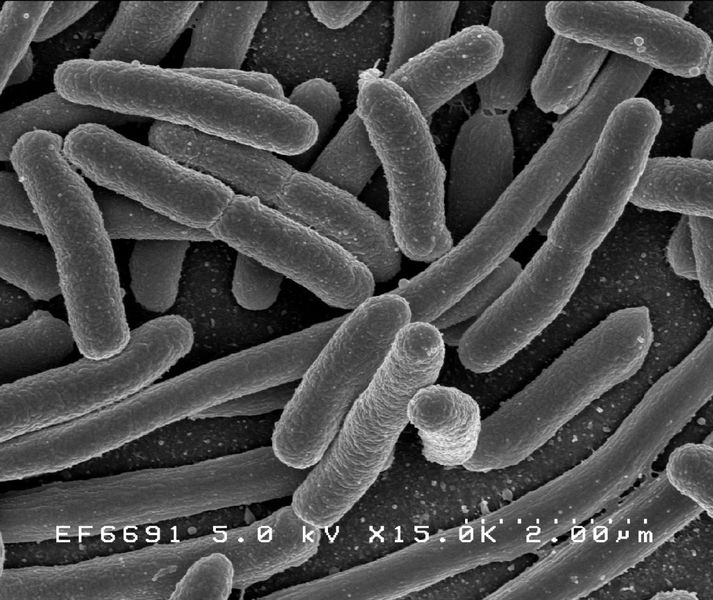
In a recent posting, the Christian Post stated: "Intelligent Design Defended by Unsolved Genetic Puzzle". This article appeared online on Nov. 17, 2006 at 2:45 PM.
In a recent conference, Dr. Paul A. Nelson (Biola University) stated that "I want to remind you that you don't need a theory of design to know that is design". In an attempt to discredit Darwin's theory of evolution by common descent, Dr. Nelson focused on ORFans, genes that seem to have no ancestral descent. In a nutshell, ORF (Open Reading Frames) are segments of DNA that code for proteins. As these genes change in evolution, a track is left. Following these tracks, through the use of computers and bioinformatics, can lead to a common ancestor. ORFans are genes that have no known common ancestor....but also, on a more technical point of view, ORFans are annotated open reading frames with no homologs in CURRENT databases. This could change with more research.
Dr. Nelson argues that humans rationality can detect intelligence without further evidence. He gave the mycoplasma example, a very simple organism that has 33% of its genes as ORFans. If I understand well, this points to the fact that the more ORFans an organism has, the higher the evidence that it originated from intelligent design.
Let me point you in another direction. Bacteriophages are bacterial viruses. These tiny creatures have the ability to inject their DNA in bacterial cells. According to Rocha and Danchin (2002) bacteriophages could be responsible for introducing A+T rich sequences into bacterial genomes (ORFans are known to be A+T rich sequences). So far, bacteriophage diversity has been poorly characterized....therefore homologs are difficult to find!
Dr. Nelson, please acknowledge that having no KNOWN homologs does NOT point in the direction of Intelligent Desing. Lets be objective here!
References:
E.P.C. Rocha and A. Danchin. 2002. Base composition bias might result from competition for metabolic resources. Trends in Genetics, 18:291-294.


